
Posted by Brent Books on Mar 28th 2026
Are suppressors legal in the United States?
Short answer: Suppressors are legal in most states, but are illegal in California, Delaware, Hawaii, Illinois, Massachusetts, Minnesota, New Jersey, New York, Rhode Island. Civilians are also not allowed to own suppressors in Washington DC.
If you’re in the market for a suppressor, you’ll need to know whether owning one is legal in your state. The basic answer is in most states, it is legal - but there are some states where it is not. However it’s not just as simple as buying a suppressor from a site (like the suppressors we sell at Creedmoor Sports) - there are things you have to consider including a waiting period and some paperwork.
In this guide we’re going to empower you with all the information you need to buy your first suppressor - what you need to do, and how the federal approval process works.
What a suppressor is for
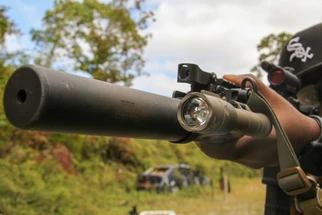
A suppressor is a device that attaches to the muzzle of a firearm and reduces the sound produced when a round is fired. It works by giving the hot, expanding gases from a fired cartridge somewhere to cool and slow down before they exit the barrel, which reduces the sharp crack you hear.
Suppressors are also called “silencers” - but they don’t make a gunshot silent, despite what you might have seen in movies. A suppressed rifle firing supersonic ammo still produces a loud noise - sometimes up to 130dB, which is louder than a jackhammer. Suppressors bring the noise down to a safe level - not a silent one.
Are suppressors legal in the United States?
Yes. Suppressors are federally legal in the United States for civilian ownership. However, they are regulated items - classified as “National Firearms Act (NFA) items” by the ATF, which means they require a more involved purchase process than a standard firearm.
The National Firearms Act (NFA) and ATF approval
The National Firearms Act of 1934 is the federal law that regulates suppressors. Originally passed as part of a broader effort to control certain weapons, the NFA placed suppressors in the same regulated category as short-barreled rifles, short-barreled shotguns, and machine guns.
To legally purchase a suppressor, every buyer must go through the ATF approval process, which includes:
- Completing ATF Form 4 (the transfer application)
- Submitting fingerprints and passport-style photos
- Passing an FBI background check
- Waiting for ATF approval before taking possession of the suppressor
The wait time for ATF approval has varied widely over the years. Historically it could stretch to 12 months or more, but improvements to the ATF’s eForms system have brought average wait times down considerably for electronic submissions. Most buyers currently see approvals in the range of 30-90 days via eForms, though this isn’t guaranteed.
Do you still have to pay the $200 tax stamp?
The $200 NFA tax stamp is no longer required, having been abolished on 1st January 2026.
NFA trust vs. individual registration
When you purchase a suppressor, you can register it either as an individual or through an NFA trust (also called a gun trust). If you plan to share the suppressor with friends or family members, it’s worth considering.
Registering as an individual
This is the simpler approach for most first-time buyers. The suppressor is registered to you personally. Only you can legally possess and use it. If you want a family member to use the suppressor at the range without you present, that is technically a transfer - which is illegal without going through the proper NFA process.
Registering through an NFA trust
An NFA trust is a legal entity that holds the suppressor. Multiple “responsible persons” can be named on the trust, meaning each of them can legally possess and use the suppressor independently, without the registered owner being present. This makes a trust a popular choice for couples or families who plan to share NFA items.
Trusts also have estate planning advantages: transferring NFA items through a trust when you pass away is generally simpler than individual transfers. The downside is that each “responsible person” named on the trust must submit fingerprints and photos as part of the Form 4 application, which adds some paperwork to the process.
For most single buyers, individual registration is perfectly fine. If you’re buying suppressors for a household or want to future-proof your collection, it’s worth consulting with a firearms attorney or an NFA-knowledgeable dealer about setting up a trust.
Which states are suppressors legal in?
Suppressors are legal for civilian ownership in 41 states. Nine states and Washington D.C. completely prohibit civilians to own suppressors - regardless of what federal law says.
States where suppressors are legal
Most US states allow civilians to own suppressors, provided they comply with the federal NFA process. In these states, once your Form 4 is approved, you are free to purchase and use your suppressor legally. This includes big states like Texas, Florida, Pennsylvania, New York and Ohio.
States where suppressors are illegal
As of 2026, the following states prohibit civilian suppressor ownership:
- California
- Delaware
- Hawaii
- Illinois
- Massachusetts
- Minnesota
- New Jersey
- New York
- Rhode Island
You also can’t own a suppressor if you live in Washington DC. State suppressor laws do occasionally change, so it’s always worth checking current legislation in your state before purchasing.
Can you travel with a suppressor?
If you plan to take your suppressor across state lines, you are generally permitted to do so as long as suppressor ownership is legal in both your home state and the states you’re traveling through or to. Unlike short-barreled rifles, the NFA does not require you to notify the ATF before crossing state lines with a suppressor. That said, it’s good practice to carry a copy of your approved Form 4 whenever you transport your suppressor.
Are suppressors legal for hunting?
In most states where suppressors are legal, yes - hunting with suppressors is permitted. In fact, suppressors are becoming very popular among hunters for several practical reasons:
Hearing protection
Repeated exposure to unsuppressed gunshots causes cumulative hearing damage. A suppressor brings the sound level down to a range that is safer for long-term hearing health - especially important if you hunt frequently.
Reduced disturbance
Suppressed shots are less likely to spook game in the immediate area, improving the chances of a follow-up shot if needed.
Better communication
Hunting with a group is easier when you can hear and speak to other hunters without ringing ears.
Neighbor and community relations
In areas where residential development has crept closer to hunting land, suppressed shooting is simply more considerate.
A small number of states that allow suppressor ownership still restrict their use for hunting specifically, so check your state’s hunting regulations before heading out. Your state wildlife agency’s website is the most reliable source for current rules.
How to legally buy a suppressor - step-by-step
Buying your first suppressor is more involved than picking up a standard firearm accessory, but the process is straightforward once you know the steps. Here’s how it works:
Step 1: Choose your suppressor
Suppressors can only be purchased through a federally licensed dealer who is also licensed to handle NFA items (a Class III SOT dealer). You’ll want a dealer who is experienced with the Form 4 process and can walk you through it (like Creedmoor Sports) - the paperwork is not complicated, but mistakes can cause delays.
When choosing a suppressor, consider the caliber(s) you’ll be shooting, the host firearm’s thread pitch, and whether you want a multi-caliber option. At Creedmoor Sports, we can help you find the right suppressor for your needs.
Step 2: Confirm your eligibility
To purchase a suppressor, you must:
- Be at least 21 years of age (for purchases from a dealer)
- Be a US citizen or legal permanent resident
- Not be prohibited from possessing firearms under federal law
- Live in a state where suppressors are legal
Step 3: Complete ATF form 4
We can help you complete ATF form 4. For individual purchases, you’ll submit your fingerprints and passport-style photos.
The ATF strongly recommends filing electronically via the eForms system, which has significantly reduced wait times compared to paper submissions.
Step 4: Wait for ATF approval
Once your Form 4 is submitted, it enters the ATF’s review queue. Your suppressor stays with the dealer during this period. Electronic submissions are currently seeing approval times in the range of 30-90 days for most applicants, though the ATF’s processing times can shift. Paper submissions take considerably longer.
Step 5: Receive your suppressor
When your Form 4 is approved, we’ll receive the stamped approval and notify you. You’ll complete the standard 4473 firearms transfer form, and take possession of your suppressor. Keep your Form 4 in a safe place - you’ll want to have it accessible whenever you’re using or transporting your suppressor.
What might be changing with suppressor laws?
Suppressor legislation has been an active area of discussion in Congress for several years, and the regulatory landscape may look different in the coming years.
The Hearing Protection Act
The Hearing Protection Act (HPA) is legislation that, if passed, would remove suppressors from NFA classification entirely. Under the HPA, buying a suppressor would be treated like buying any other firearm - a background check through NICS and no lengthy wait. The bill has been introduced multiple times in recent congressional sessions and has gained meaningful support, but has not yet passed as of early 2026. It remains one to watch.
State-level trends
On the state level, the trend has generally been toward expanding suppressor access rather than restricting it. Several states have loosened hunting restrictions on suppressed firearms in recent years, and advocacy groups like the American Suppressor Association (ASA) are actively pushing for further reform at both the state and federal level.
If you’re following suppressor legislation, the ASA is a solid source for current developments. Their education resources track state-by-state laws and federal legislative activity.
Frequently asked questions (FAQs) about suppressors and silencers
Do I still have to pay $200 for a suppressor?
No. As of 2026, the $200 NFA tax stamp is no longer required to purchase a suppressor.
In which states are suppressors illegal?
Suppressors are currently prohibited for civilian ownership in California, Delaware, Hawaii, Illinois, Massachusetts, Minnesota, New Jersey, New York, and Rhode Island, as well as Washington D.C. In all other US states, suppressors are legal subject to the federal NFA approval process.
What’s the difference between a suppressor and a silencer?
Nothing - they’re the same thing. “Silencer” is the original legal term used in the NFA, while “suppressor” is the more accurate and commonly used term in the shooting community today. Both terms refer to a muzzle-mounted device that reduces the sound of a fired shot.
Can someone else use my suppressor?
If the suppressor is registered to you individually, it must remain under your direct supervision at all times. Another person - even a family member - cannot legally use your suppressor without you present. If you want multiple people to be able to use a suppressor independently, registering through an NFA trust and naming them as responsible persons is the proper approach.
How long does it take to get approved for a suppressor?
With electronic filing through the ATF’s eForms system, most individual Form 4 applications are currently approved in roughly 30-90 days. Paper filings take significantly longer - often six months or more. Processing times can vary based on ATF workload, so your dealer’s current knowledge of wait times is the most reliable guide.
Ready to buy your first suppressor?
Suppressors are legal, regulated, and genuinely useful - whether you’re a hunter looking after your hearing, a range shooter who wants a more enjoyable experience, or simply someone who values responsible firearm ownership. The NFA process requires some patience, but it’s well within reach for any eligible buyer.
